How Much Do Delivery Platforms Really Cost a Restaurant Owner in 2026?
Delivery platform commission, hidden fees, margin impact: a full breakdown of the real costs and viable alternatives in 2026.
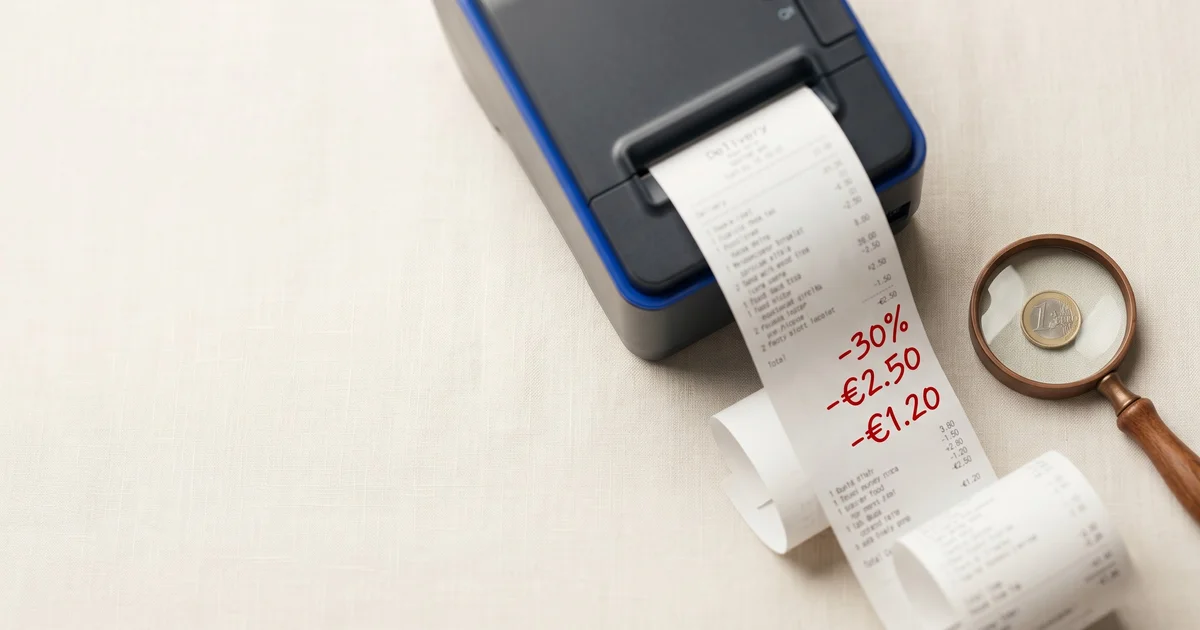
You glance at your monthly statement and the picture is painfully clear: out of $22,000 in revenue generated through third-party delivery platforms, nearly $6,600 was siphoned off in commissions. That is roughly a full-time net salary. In just a few years, delivery platform commissions have become one of the three biggest cost line items in a modern restaurant operation, right behind food cost and labor. In 2026, more and more restaurant owners are finally asking the real question: is this cost still sustainable, and more importantly, is there genuinely a better alternative?
The hard numbers behind 2026 commissions
Let’s get concrete. Today’s major delivery aggregators apply fairly homogeneous pricing grids, structured around three tiers depending on whether the platform handles the physical delivery or not. The ranges observed across the U.S. market in 2026 have been remarkably stable since 2023.
Here is the typical breakdown of delivery platform costs for a restaurant, on an average order:
| Type of service | Commission charged | Included in the commission |
|---|---|---|
| Platform handles delivery | 28 to 35% | Logistics, payment, visibility |
| Restaurant handles delivery | 12 to 18% | Payment, visibility |
| Click and collect via the platform | 8 to 14% | Payment, visibility |
| Visibility or boost package (optional) | + 3 to 8% | Sponsorship, featured placement |
According to research published by leading business schools such as Harvard Business School, cumulative commission costs now represent on average 28 to 32% of the average ticket on most restaurant marketplaces in North America and Europe. On top of that, you can expect onboarding fees, sometimes separate card processing charges, and semi-annual marketing contributions that many restaurant owners only discover by reading their contracts line by line.
The math is brutal but straightforward: for a delivered order to be as profitable as a dine-in order, you would need to sell it for 35 to 40% more online. Yet aggregators encourage exactly the opposite, through algorithm-driven promotions and a constant flow of discount codes.
The hidden costs nobody talks about
Beyond the headline commission, several diffuse costs quietly eat into your restaurant’s delivery margin, and these may be the most dangerous because they never appear explicitly on an invoice.
The first is algorithmic pressure on ranking. To stay visible in the top results inside the app, a restaurant has to participate regularly in promotional pushes: 20% off, deeply discounted combo menus, free delivery. Those discounts are fully funded by the restaurant on top of the commission. According to recurring industry surveys published by groups like Pew Research, a large majority of restaurants on these platforms report running at least one promotional campaign per month, with an average discount of 20 to 25%.
The second hidden cost, and arguably the most strategic, is the loss of customer data. Your customers are not really your customers: they belong to the platform. You don’t have their email, their phone number, or any usable order history. You can’t re-engage a lapsed customer, announce a new menu, or build loyalty with a personalized offer. In 2026, in a market where new customer acquisition costs have skyrocketed, this is a silent loss that is hard to quantify but very real.
Finally, there is the opportunity cost: every order placed through an aggregator is an order that didn’t go through your own channel. You pay twice: an immediate commission, and a consumer habit that gets locked in for the long haul.
What are delivery platforms really costing you?
In two minutes, calculate how much you would recover each month by shifting part of your orders to your own direct channel.
What this really means for your margins
Take a concrete example. You sell a burger, fries and drink combo for $18 on a third-party delivery platform.
| Line item | Amount |
|---|---|
| Listed price | $18.00 |
| Sales tax (~8%, passthrough) | -$1.33 |
| Platform commission (30%) | -$5.40 |
| Food cost (28%) | -$5.04 |
| Delivery packaging | -$0.95 |
| Remaining gross margin | $5.28 |
Now, out of that $5.28, you still have to cover rent, wages, utilities, payroll taxes, and equipment depreciation. Across most quick-service concepts, the final net margin on an aggregator order lands somewhere between 2 and 6%, sometimes close to zero. On certain promotional pushes it even turns negative: you are literally paying to serve a customer who will never really be yours.
Compare that to the same order placed through your own online ordering channel: no 30% commission, just standard payment processing fees of around 2.9% + $0.30 per transaction, plus optionally a fixed monthly subscription. The remaining gross margin mechanically jumps to more than $10, nearly double.
The alternative: take back control with a direct channel
The most credible alternative to third-party delivery platforms in 2026 is not to walk away from digital, quite the opposite. It is about taking back ownership of your own ordering channel: a branded ordering website, a mobile app under your name, and a click and collect flow integrated with your point of sale.
That is exactly the philosophy behind XPRIO: giving every restaurant owner their own branded mobile app, without paying a commission proportional to their success. With our mobile and web solution, customers order directly from you, your data belongs to you, and your margin is no longer dictated by an aggregator’s algorithm. The stakes go beyond money: they are strategic. Your independence as a restaurant owner is what is really on the line.
The economics flip entirely. Instead of paying 25 to 35% on every order, you pay a fixed monthly subscription. You can review our transparent pricing to see exactly where the break-even point sits for your business. In practical terms, beyond roughly 150 to 300 direct orders per month, the direct channel becomes significantly more profitable than the third-party platform, and the gap widens exponentially after that.
Layer on top of that a built-in loyalty program, push notifications to announce new menu items, the ability to collect verified reviews, and it becomes clear why a growing number of restaurant owners are progressively shifting volume onto their own channel.
How to transition smoothly
Don’t skip steps. Cutting off third-party delivery platforms cold turkey would be a strategic mistake: they remain an excellent acquisition lever for new customers, and the traffic they capture cannot be replaced overnight. The right approach is gradual and hybrid.
Step 1: equip yourself with a direct channel right now. Branded ordering site, mobile app, QR codes on tables, flyers tucked into delivery bags. The infrastructure has to be in place before you start steering customers toward it.
Step 2: nudge your customers to switch. Slip a flyer into every delivery bag with a promo code valid only on your own app. Offer a free item for the first direct order. A customer who has downloaded your app is a customer for life, or pretty close to it.
Step 3: manage the mix. Track month over month the share of orders coming through third-party platforms versus your direct channel. A realistic 12-month target for most concepts: move from 100% platforms to roughly 40-50% platforms and 50-60% direct. That swing alone recovers several thousand dollars in monthly margin without sacrificing acquisition.
Step 4: put the data to work. Once your customers are on your app, use their order history intelligently to re-engage, segment, and serve targeted offers. That is when a direct restaurant channel becomes a real asset, not just a way to save on commissions.
Take back control of your online orders
Mobile app, ordering site, click and collect, loyalty: everything you need to free up your margins, with no per-order commission.
Start my free trialConclusion: the bottom line
- Third-party delivery platform commissions in 2026 sit between 25 and 35% of the order value, with marketing fees and discount campaigns piled on top, all funded by you.
- Beyond the direct cost, you lose customer data, control over your brand image and your margins, and you become dependent on a ranking algorithm.
- On an $18 order, the remaining gross margin drops to about $5 via an aggregator, versus more than double via a direct channel.
- The ideal transition is hybrid and gradual: keep the platforms for acquisition, shift your repeat customers onto your own app.
In 2026, the real question is no longer whether delivery platforms are expensive. That debate is settled. The real question is: how much longer are you going to wait before taking back control of your customer relationships and your margins? Every month spent 100% on aggregators is a month of margin that is gone for good. The best time to build your direct channel was two years ago. The second best time is right now.
Frequently asked questions
What is the average commission charged by delivery platforms in 2026?
In the United States, third-party delivery commissions typically range between 25 and 35% of the gross order value, on top of additional marketing fees and paid visibility options.
Can you negotiate your commission with a delivery platform?
Very rarely. Pricing grids are standardized by segment. Only the highest-volume operators occasionally secure 1 to 3 points of discount, often in exchange for exclusivity commitments.
Is there a profitable alternative to third-party delivery platforms?
Yes: build a direct channel with your own branded ordering site and mobile app. A fixed monthly subscription replaces a variable 30% commission, which becomes profitable once you process a few hundred orders per month.
Do you have to leave delivery platforms completely?
Not necessarily. A hybrid strategy still makes sense: keep the aggregators for customer acquisition and gradually shift your repeat customers to your direct channel, which carries a much higher margin.
Does click and collect cost less than delivery via a platform?
Yes, by a wide margin. Click and collect through your own channel eliminates the 25 to 35% commission and preserves the customer relationship, often for less than 1% of the revenue it generates.
Get hands-on with XPRIO
Mobile app, website, order management: all live in 72h. No commitment.
Start my free trialRelated articles
Click & Collect, Delivery, or Pickup: Which Channel Should Your Restaurant Choose in 2026?
Click and collect, delivery, or takeout: a complete comparison of costs, margins, and strategy to pick the right channel for your restaurant in 2026.
Take Back Control: The Practical Playbook to Gradually Leave Third-Party Delivery Platforms
Leave delivery platforms with no risk: a 6-month switch plan, concrete weekly steps, and measured margin recovered for restaurant operators.
Managing Your Delivery Drivers Without Paying 30% Commission: In-House Fleet or Third-Party Platform in 2026?
Restaurant delivery fleet in-house or third-party platform in 2026: real cost, tipping point, hybrid model and tools to operate without paying 30% commission.